Rights and Responsibilities in Shared Public Spaces
Rights and responsibilities help separate claims to use shared public spaces from expectations about conduct, making civic disagreements clearer and fairer.
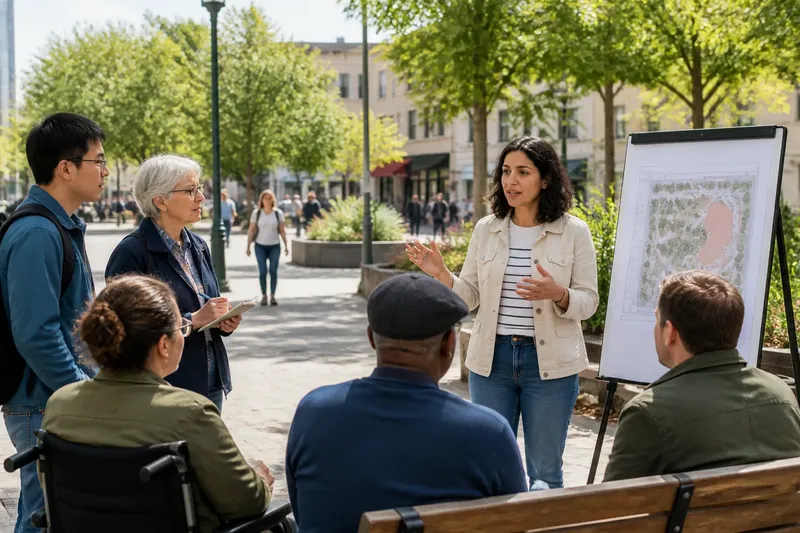
When a council proposes new rules for a public square, residents may ask both who can use it and how visitors should behave. Rights and responsibilities help separate those questions without treating access as a reward for good conduct.
Rights and responsibilities make different claims
A right is a claim protected or recognised by a legal or civic framework. The duties connected to it vary: one party may need to avoid interference, an institution may need to provide a process or service, or several parties may have distinct obligations. The nature of the right and the rules that govern it determine what is required.
A responsibility is an obligation or expectation to act, refrain from acting, or contribute to shared life. Some responsibilities are legal duties; others are civic or interpersonal expectations. Naming which kind is being discussed prevents a moral appeal from being mistaken for a legal command.
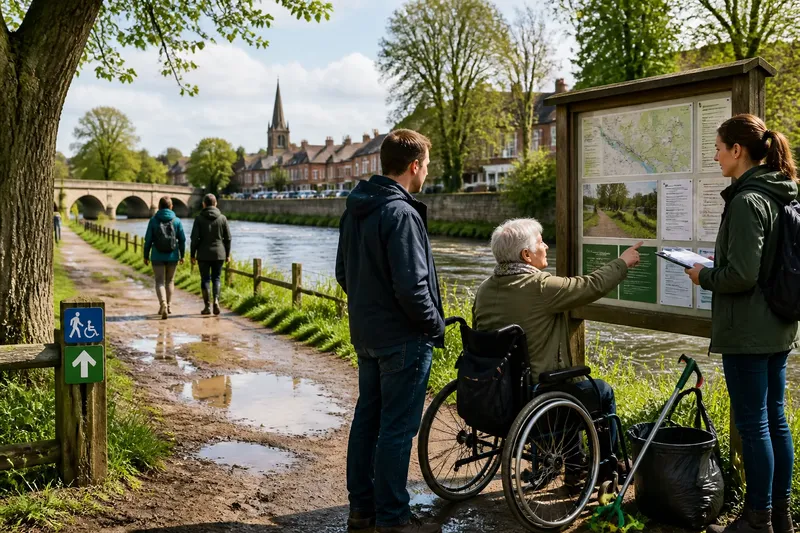
Think of a shared noticeboard in a community hall. People may be entitled to post notices under the hall’s rules, while users are expected not to cover other notices or damage the board. The analogy is limited, but it shows how access and conduct can matter at once without one automatically cancelling the other.
Rights and responsibilities do not cancel each other
A person does not generally lose every claim to fair treatment because others think they have failed to contribute. At the same time, recognising a right does not settle every question about how it applies: some rights have lawful limits, and particular procedures or conditions may govern their exercise.
Keep the questions distinct. Ask what claim is being made, what kind of duty may follow, and which rule or authority sets its scope. If a proposal would restrict access, ask for the specific basis and consider whether the restriction treats people fairly.
Shared public spaces bring the distinction into view
Public spaces make competing expectations visible. A person may seek equal access to a square; another may ask visitors to keep paths clear; a local authority may have responsibilities concerning rules, maintenance, or a fair process for complaints. These are connected issues, but they involve different actors and standards.
Say a council is considering a rule for a small plaza where a community group holds meetings. The council proposes keeping one route open for people passing through, while the group wants room to arrange chairs. To assess the proposal, residents can ask whether the route is accessible, who has authority to set the rule, and whether the meeting can continue in a workable form. The decision should make clear which interests it accommodates and who is responsible for carrying it out.
Check a public-space proposal before accepting its terms
Use these checks to identify what a rule asks of each person and what the authority proposing it must explain. Each result points to a practical next action.
- Check who may enter or use the space. If the rule names clear, relevant conditions, compare them with the stated purpose; if it leaves access unclear, ask the responsible body to explain who is included.
- Check what conduct is restricted. If the prohibited action is specific, consider whether it addresses the problem described; if the wording is vague, ask for a clearer rule before assuming what is allowed.
- Check who has authority to make the rule. If the proposal identifies the responsible council or other body, direct questions there; if no authority is named, ask who will make and enforce the decision.
- Check how a person can raise an objection. If a contact or review route is provided, use it to describe the effect of the rule; if none is given, request a way to challenge or clarify it.
- Check whether the rule affects people differently. If a barrier is apparent, explain who faces it and ask about an alternative; if no specific barrier is evident, still check whether the rule is applied consistently.
- Check what the authority will do in response. If the proposal names an action and a responsible party, assess whether it addresses the stated concern; if it does not, ask for the missing action or a revised proposal.
How should you read a dispute about public space?
Who is entitled to use the space?
Look for the access rule and the authority responsible for applying it. If the rule is unclear, ask the relevant public body to explain its scope and how a person can seek a review.
What conduct does the rule expect?
Separate specific requirements, such as keeping an identified route clear, from general appeals to be considerate. Ask whether the requirement is legally binding or a request to users.
Can one person’s use limit another person’s access?
It can, so identify the particular conflict rather than assuming either claim settles the issue. Ask the decision-maker to explain how the rule balances access and conduct, and what alternatives are available.
Who must explain the decision?
That depends on who made the rule and the process that applies. Look for the named authority, its explanation of the decision, and any route for questions or review.
Responsibilities should reflect people’s real circumstances
A shared expectation can affect people differently. A meeting scheduled during working hours, for instance, may be difficult for residents with jobs, caring duties, disabilities, or transport barriers. A fair process considers those practical limits rather than assuming everyone can participate in the same way.
Imagine a neighbourhood group is invited to comment on a proposed plaza rule, but its evening-shift members cannot attend the daytime meeting. The organisers add a written comment route and ask a local access group to review the draft. The expected observable result is that people can submit views through more than one route; the organisers can then explain how those views affected, or did not affect, the proposal.
Rights and responsibilities are useful search terms for a public-space dispute because they keep access, conduct, and institutional duties in view at the same time. When a rule is unclear, ask what it permits, what it requires, who set it, and how affected people can respond.